
SpyVector is the future-facing potential of our toolkit. SpyCatcher-modified hexons enable covalent surface display of any SpyTagged protein, while the vector simultaneously encodes a programmable gene payload — opening areas that conventional vectors can't reach.
The same adenovirus backbone now does two jobs at once: it covalently presents surface ligands via hexon-fused SpyCatcher, and delivers a programmable gene of interest inside. Tap the glowing markers to walk through the architecture.
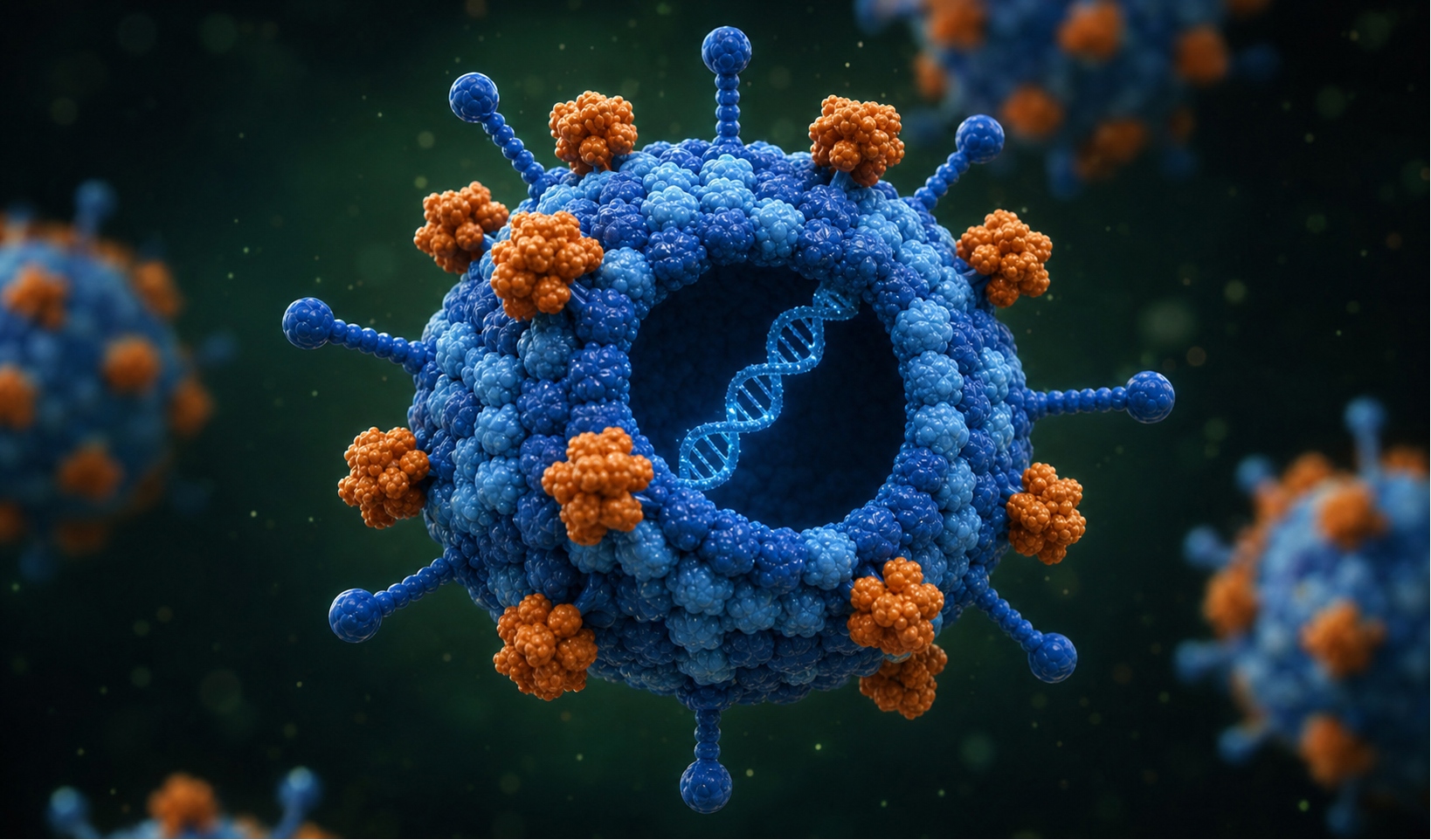
SpyCatcher domains genetically fused into hexon hypervariable regions enable covalent antigen display while shielding the vector from anti-Ad pre-existing immunity.
Covalently binds any SpyTag-fused partner on contact. Forms an irreversible isopeptide bond — the surface-decoration mechanism that makes SpyVector programmable.
Viral glycoproteins, tumour antigens, nanobodies, or targeting peptides. Display dictates antibody response and tissue tropism; combine with the genetic payload for true bivalent therapeutics.
Mediates receptor binding and cell entry. Hexon-level SpyCatcher decoration shields the vector from HPF4 and anti-vector immunity, enabling re-dosing with the same backbone.
Encoded inside the capsid: antigens for in-vivo expression, shRNAs for gene silencing, cytokines (IL-12, IL-15), or checkpoint inhibitors. Decoupled from the surface antigen.
Traditional adenoviral vectors trade off between gene delivery and antigen presentation. SpyVector does both — covalent surface display plus genetic payload — and adds a third dimension: targeted tissue tropism via hexon ligands.
SpyVector is the future-facing arm of our platform. These are the indication and modality areas where we believe the architecture unlocks something conventional vectors cannot. Each is an active scientific exploration, not a clinical commitment.
Hexon-displayed nanobodies and scFvs to route vector to liver, lung, CNS or tumour — addressing the off-target problem that limits systemic gene therapy.
Tumour-selective promoters (hTERT, survivin, E2F) restrict replication to cancer tissue. Self-decorating vectors combine targeting, immunity, and lysis in one therapy.
Adenoviral innate sensing drives potent CD8+ responses without adjuvant — exploring applications in chronic infections (TB, HIV, HBV) and therapeutic cancer vaccines.
Encode shRNAs against oncogenes (KRAS, MYC, BCL-2) within the capsid. Tissue-targeted delivery solves the penetration problem; re-dosability solves sustained silencing.
Investigating delivery of CAR transgenes directly into T cells via hexon-displayed CD8 nanobodies — a potential answer to the cost and access barriers of ex-vivo CAR-T.
Capsid decoration evades pre-existing anti-vector immunity. Exploring repeat-dose adenoviral therapeutics in indications where conventional vectors are precluded.
Our SpyVector candidates are pre-clinical — designed as platform-validating programs to demonstrate the architecture across vaccine and oncology indications.
| Candidate | Platform | Target | Indication | Stage |
|---|---|---|---|---|
| SPYVEC-FLU | SpyVector | Influenza | Universal influenza vaccine | Preclinical |
| SPYVEC-Onc | SpyVector | Cancer Antigens | Therapeutic cancer vaccine | Discovery |